Have you ever heard of the first African American princess, Tiana? She was the only dimpled Disney princess or Mulan. The famous princess is based on an ancient Chinese legend of Hua Mulan. She was a warrior, described in the poem “The Ballad of Mulan”. The stories of most of the bravest women in history or mythology have been adapted in the comic book universe, to tell those sagas in a colorful way to children, or even adult readers. Even the gaming industry adopted some of the famous female characters with historical significance. These stories are about the historical significance of those princesses on the pages of color comics; princesses who are mythically, historically, or socially linked with real-life settings, but long forgotten. Here is the list of the 10 forgotten princesses adapted in the comics.
10. Corn Maiden
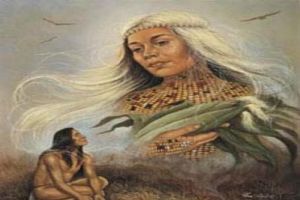
Corn Maiden, also called Corn Mother, is a mythological figure believed to be responsible for the origin of corn or maize among the indigenous farming tribes of North America. Local legend tells of the overflowing corn warehouse when she was near it. In the Arapaho tradition, to get rid of her, she was tied up and drowned in the river, while in the Zuni culture, she was frightened by the erotic twists of the dancers. In the Tepecan version of this tale, when she spends her first night after getting married in a private room in her husband’s family home, she is full of corn in the morning. According to other local legends, she was supposed to secretly produce corn kernels by rubbing her body, or literally removing calluses and filling bucket after bucket.
9. Shajar Al-Durr

Shajar al-Durr, which means pearl tree. It really played a crucial role after the death of Sultan As-Salih Ayyub during the Seventh Crusade against Egypt, where the Battle of Fariskur took place and King Louis IX was captured. Shajar, described by historians as a beauty with a brain, began her life as a Turkish servant, bought for the Sultan of Egypt. While in a relationship with Aybak, Shajar al-Durr firmly established the Mamluk dynasty.
After she fought and captured King Louis IX, Shajar al-Durr negotiated a treaty to return the captured king to his country for a ransom amount of 400,000 in the currency used in France during the Middle Ages, which was approximately 30 % of France’s total annual revenue. . She was later caught in the act of killing Aybek and imprisoned by Aybek’s first wife, who executed her by beating her to death at the hands of servants with wooden clogs, and then her naked corpse was thrown over the wall of the city.
8. Pasiphaë

According to Greek mythology, Pasiphaë was the Greek queen and daughter of Helios the Sun. She married King Minos of Crete and was known to give birth to Asterion, also known as Ruler of the stars, also called Minotaur by the Greeks. . She was famous for having an irresistible sex drive towards a bull that Poseidon gave to King Minos. King Minos, also ironically son of Zeus, took the form of a bull and mated with his mother Europa. Being a Bull Goddess, when Pasiphaë learned that her husband was cheating on her, she cast such a spell that if he slept with someone, she would ejaculate snakes and insects. But, Procris, the daughter of the ruler of Athens, slept with Minos with a protective herb.
7. Nzinga
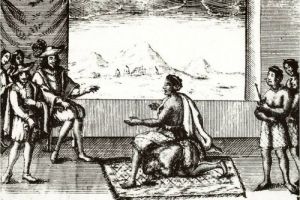
Queen Anna Nzinga was a 17th-century queen of the Ndongo and Matamba Kingdoms of the Mbundu people in Angola. Being the daughter of King Kiluanji, she was named Njinga, derived from the verb Kimbundu, Kujinga, which means to turn or twist, because her umbilical cord was wrapped around her neck. When her brother was captured by the Portuguese, she visited him and demanded the return of her brother with the promise of leaving Ndongo. At her meeting, the Portuguese did not offer her a chair, but a rug to sit on, as a sign of disrespect.
In response, Nzinga ordered for one of her servants and sat on the servant like a chair. After moving south, she started a new country by conquering the cannibal tribe known as Jaga. According to local legend, Nzinga obtained a large group of 60 male harems at her disposal. Her men fought to the death to spend the night with her, while, after a single night, they were executed. It is also said that Nzinga made her male servants dress as women.
6. Hatshepsut

Hatshepsut, meaning the most important of noble ladies, was the fifth pharaoh of the 18th Dynasty of Ancient Egypt, whose mother gave birth to her in a lion’s den. She was one of the greatest pharaohs of Egypt, besides King Tut or Nefertiti. The Metropolitan Museum of Art in New York has an entire room dedicated to her. Fifteen hundred years before the birth of Jesus, she ruled his land for twenty-two years. She ruled Egypt wearing men’s clothing, including the pharaoh’s false beard. According to Egyptologist James Henry Breasted, she is the first great woman in history reported to us. She built the Karnak Temple and restored the original Mut Precinct. Nine gold cartridges bearing the names of Hatshepsut and Thutmosis III were found at Karnak.
5. Wu Zelian

Wu Zelian, also known as Wu Zhao; The only emperor of China in over 4,000 years of ancient history who lived during the Tang Dynasty. Wu was married to Emperor Taizong, and after his death, she married his successor and his ninth son, Emperor Gaozong. After Gaozong’s died of heart disease in 690, she ruled China until 705 AD. She had a huge secret police intelligence network published all over China and she was also famous for her “human-pig” torture in which all her limbs and tongue were removed. In addition to marrying twice, he also had an affair with a Buddhist monk, Huaiyi, around 685. His period of political and military leadership includes the great expansion of the Chinese empire beyond its former territory, deep into Central Asia and the top of Korea. Peninsula.
4. Khutulun
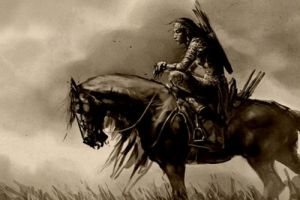
Khutulun was the most famous daughter of Kaidu, the most powerful ruler in Central Asia, and the niece of Kublai Khan. Her name was founded on the writings of Marco Polo and Rashid al-Din. According to Marco Polo, Khutulun was described as an excellent warrior who fought alongside her father in many battles.
When Emperor Kaidu desperately wanted to see the marriage of her daughter Khutulun, she refused to do so unless she found the right man who could defeat her in wrestling. With the consent of her father, she made an offer for all the men in her dynasty to beat her in wrestling and marry her. But, the condition on the other side of her was that if someone lost the battle with her, they should present him with 100 horses from her. But no one could beat her and she won 10,000 horses. Khutulun is considered one of the last great nomadic warrior princesses.
3. La Maupin
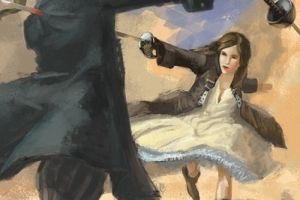
Julie d’Aubigny, better known as Mademoiselle Maupin or La Maupin, born in 1673, was an incredible swordswoman and opera singer of the 17th century. She used to dress like a man from an early age while she learned to dance and fencing. This bisexual celebrity attended a royal ball dressed as a man, thrown by Louis XIV or his brother. She was famous for her opera voice and debuted as Pallas Athena in Jean-Baptiste Lully’s Cadmus et Hermione. But, when she kissed a young woman at a society ball and was challenged to duels by three different nobles, she had to interrupt her career and leave Paris. Théophile Gautier in her novel Mademoiselle de Maupin (1835) based on her the main character of her, Madeleine de Maupin.
2. Mai Bhago

It was taken from the actual historical character, Mai Bhago, whose name, after converting to Khalsa, was Mai Bhag Kaur, as Kaur was a surname that all Khalsas women took. This 18th-century Sikh warrior saint was the sole survivor of the Battle of Khidrana that saved Gobind Singh Ji, who founded the Khalsa. Mai Bhago was born in her ancestral village of Jabal Kalan, now Amritsar. She was Sikh by birth and later married Nidhan Singh Waraich. At that time, India was ruled by the Mughals and Aurangzeb was the emperor when he sent the imperial army in search of Guru Gobind Singh. Mai Bhago stopped and challenged them near the pool of Khidrana with her forty Sikh warriors of hers who achieved her martyrdom in this battle. Guru Gobind Singh Ji took Mai Bhago under his care and later, she was known to be one of his bodyguards, in masculine attire.
1. Noor Inayat Khan
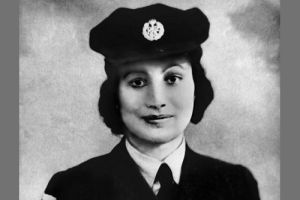
Noor-un-Nisa Inayat Khan was an Allied special operations agent during World War II, later receiving the George Cross, the highest civilian award from the United Kingdom and other Commonwealth nations. Of Indian origin, he was born in Moscow and began working as the only radio operator in occupied Paris. While the average lifespan of that job was around a month due to the intense chaos of WWII and the ongoing Nazi attack, she, with her incredible skills and bravery, lasted for almost 5 months. Her father, Hazrat Inayat Khan, was a Muslim Sufi nobleman who was a personal friend of Mahatma Gandhi. She was also the second-class aeronautical woman in the Women’s Auxiliary Air Force. She was finally captured, when a double agent betrayed her to the Nazis, they transferred her to the Dachau concentration camp and shot her dead.
There are many more women throughout history and mythology whose tales deserve to be adapted into recent movies or comics. We always hope to see them in these media so that we can know their meaning in our history. Local legends are always fascinating and sometimes more exciting than fairy tales, and they are also made up of many female characters who were brave, beautiful, and worthy of becoming the central characters of any productive medium. With this dream, we end this list here and we bow to all those brave warrior princesses who were famous in their own way.