In 1859, Charles Darwin published his historical book “On the Origin of Species”. In the book, he proposed the theory of natural selection, where he claimed that the body and organs of living things slowly adapt to improve whatever they are used for, while parts that have fallen into disuse become smaller before finally disappearing.
Like other plants and creatures, the human body is the result of millions of years of natural selection. The parts of the body that we need for our survival have specialized in what they do, while the parts that we don’t need are gone. But what parts have we lost over time? That is what we want to answer.
10. Brow ridges

Several species of early humans, including Homo erectus, Homo heidelbergensis, and our cousins, the Neanderthals, had arched brows. That is, the area of their heads just above the eyes leaned back on top of their heads, much like the heads of chimpanzees and gorillas. Today, Homo sapiens have lost the ridges of the eyebrows. Instead, we have flat faces and tall foreheads that go up until they merge with the top of our heads. Why is this so?
Researchers are not sure why ancient humans had eyebrows or why we lost them. However, they believe that we may have lost them for social reasons. During a social experiment, anthropologist Grover Krantz noticed that people avoided him and even crossed the streets just to avoid passing him when he wore a Homo erectus-type mask in public.
This indicates that the brow ridges were not as friendly and had to disappear as humans became more social and began to live in large communities. In return, our heads became smaller and we developed more prominent, movable eyebrows that we use to convey subtle information and emotions.
9. Claws
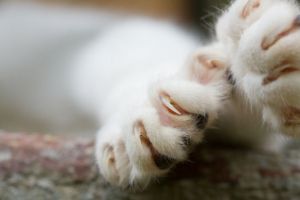
Logic dictates that herbivores have hooves, carnivores have claws, and omnivores have claws or fingernails. In reality, all omnivores would have had claws, if not for primates, a group of closely related creatures that includes humans, apes, lemurs, lorises, monkeys, and tarsiers.
The first primates had claws, which they used to dig and scratch, but they lost them when they began to live in the trees. Now the claws are very useful for climbing trees. However, they quickly become inconvenient when a primate wants to move from one branch to another. This was the reason why the first primates developed hands and nails that could climb trees and hold onto branches.
8. Prehensile feet
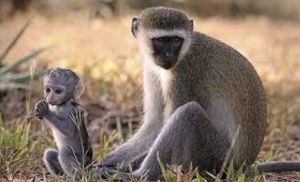
We’ve probably all seen a photo of an ape using its feet to grab things or hang from tree branches. Those are prehensile feet and they are a defining characteristic of apes and primates. Think of them as feet that can act as an extra hand when needed.
Humans are the only primates that do not have prehensile feet. We used to have them, but not anymore. The first humans had prehensile feet until they began to walk on the ground. Their fingers became straighter and firmer and they lost their flexibility as they evolved to walk and run. Our first four toes lost their flexibility first and the big toe soon followed, making it our last body part to evolve.
7. Canine teeth

Man with gold front teeth, close-up of the mouth
Take a look at the teeth of chimpanzees, gorillas, orangutans, and other great apes and you can’t miss those long, sharp canine teeth. Humans have canine teeth too, but those are just names. They are neither long nor sharp and are hardly longer than the other teeth in our mouth.
So why do we not have long and sharp canines like other apes?
In fact, we used to, but we lost them after they fell out of use. Like other apes, early humans developed large canines to fight other males for dominance. The prize of these fights was an exclusive mating right for several or all the females of the group.
However, struggles for dominance slowly fell into obscurity as the first human babies grew weaker and more vulnerable to predators. This caused human males to spend more time protecting their babies than fighting for mating rights. Our canines have been getting shorter since then and are currently the smallest they have ever been.
6. Long arms

The first humans had long arms and short legs, just like the apes of today, when they first appeared six million years ago. We, conversely, have shorter arms and longer legs. Why did this happen?
The reason is not far-fetched. The first humans were shorter and survived on a plant diet. This meant that they needed a larger digestive system and organs to process their meals. This caused their rib cages to expand to accommodate their increased digestion needs.
Things changed 1.9 million years ago when humans migrated to warmer climates and added meat to their diet. Their bodies became narrower and their digestive system became smaller as meat requires a shorter digestive tract and organs to digest,
At the same time, the legs were lengthened to allow them to cover longer distances while searching and chasing their prey. . The legs of the first humans continued to grow until the first Homo erectus appeared. They were the first ancestors of modern humans to migrate from Africa. Their legs were spectacularly long, which helped them lose body heat.
5. Big stomachs

The human brain has grown larger since Homo habilis first appeared two million years ago. The Homo habilis brain was about 600 cubic centimeters. However, 1.5 million years ago, Homo habilis became extinct and was succeeded by Homo erectus, which had a brain size of around 900 cubic centimeters.
Researchers know that our brains got bigger as we gained access to more food. Ironically, our stomachs got smaller at the same time. On the surface, this doesn’t really make sense considering that larger brains require more energy, which in turn requires more food. Logically, our stomachs should be enlarged to accommodate more food.
The opposite happened because early humans made the switch from a strictly herbivorous diet that consisted of low-quality plants to an omnivorous diet that included lots of high-quality meat. Their stomachs became smaller because meat contains more nutrients and energy than plants.
4. Large eyes

Some species of early humans had large eyes. This includes Neanderthals, our cousins, who freely interbred with early Homo sapiens for about 5,000 years before becoming extinct.
Researchers believe that Neanderthals developed large eyes after migrating from Africa to colder parts of Europe and Asia, where there was little sunlight. His eyes widened to make room for more light. We Homo sapiens, on the other hand, have smaller eyes because we stayed in Africa where there was enough sunlight.
Interestingly, there are suggestions that the Neanderthal’s large eyes were a double-edged sword that may have contributed to its extinction. The researchers believe that they devoted more of their brain to processing information from their eyes. This meant that other parts of their brain, including the parts they needed to develop complex social skills as Homo sapiens did, were smaller.
3. Tails
Modern humans grow tails in the embryo and have small tail bones after they are born. The tail and tailbone are actually the remnant of the long tails we used to have. However, we missed those queues twice. We cultivated it, lost it, and regrown it before losing it a second time.
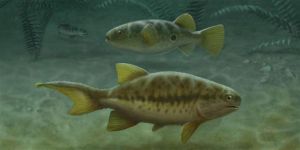
Humans first lost their tails when the Aetheretmon, an extinct fish considered the ancestor of all land creatures, lost one of its two tails.
The Aetheretmon had two tails, one on top of the other. The first was a normal tail fin that he used to swim, while the second was a fleshy tail that he used to swim faster. However, the fish later lost most of the fleshy tail, while maintaining its regular tail fin.
Millions of years later, the Aetheretmon would completely lose its regular tail fin as it evolved from a sea creature to a semi-aquatic and then terrestrial creature. However, the fleshy tail that it previously lost grew back into the tail that we see in most land animals today.
Hominids who would later become apes and humans lost this fleshy tail when they started walking on two legs. Apparently, the tails would have affected his upright posture. Today, humans, chimpanzees, and gorillas do not have tails. Many monkeys have long tails, but those that walk slightly more upright have shorter tails.
2. Fur
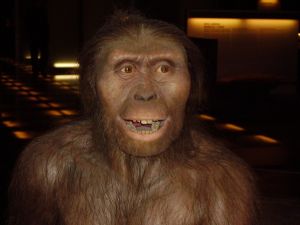
Why do humans have hair even though apes have hair? To find out why we must go back to Australopithecus afarensis, a hominin considered the ancestor of the first humans.
Australopithecus afarensis looked more like apes than humans. Think of him as an ape with human characteristics. It had arms, legs, and ape fur, but it had a large brain and could walk upright like humans.
We lost our fur when Australopithecus afarensis left the dense forest covers to hunt meat in the open savanna, exposing them to more sunlight than they were used to;
however, sunlight and fur do not go hand in hand. The fur prevents sweating and traps heat, which would have caused the bodies and brains of Australopithecus afarensis to overheat. Then they began to lose their fur to allow them to sweat and lose heat more easily.
1. Whiskers

Most mammals have whiskers, but not humans. We don’t have those things. Interestingly, we used to have whiskers, but we lost them about 800,000 years ago. To understand why we lost our whiskers, we must understand why some animals still have them.
Animals use their whiskers to complement their eye. Every creature with a mustache actually has two types of whiskers: a long mustache and a short mustache. Animals use the long mustache to orient themselves in the dark and in confined spaces, while the short mustache is reserved for recognizing objects.
However, we humans lost our whiskers after we transferred the jobs of both whiskers to other parts of our bodies, particularly our fingertips, lips, and genitals. Those parts are sensitive, just like whiskers, because they take in information from our surroundings and pass them over to our brains.