Sri Lanka is a paradise on Earth where its glory and beauty is not only due to the amazing natural resources it possesses but also to its incredible cultural heritage. Sri Lanka has a multicultural society and therefore people celebrate different cultural festivals which in fact add color to their lives. Here are 10 wonderful cultural festivals in Sri Lanka.
10. Thai Pongal

It started from the first day of Thai (the 10th month in the Tamil calendar); Thai Pongal is one of the most important harvest festivals in Sri Lanka. Mainly celebrated by Hindus throughout the country, for 3 days; To pay homage to the sun for an abundant harvest, for more than 1,000 years. They start the festival by drawing “kolams” with rice paste in the front yard of the houses and also decorating their houses with banana leaves. They prepare special rice called “Pongal rice”, by boiling milk mixed with rice, brown sugar, and spices. Not only the Sun, which they call “Surya”; They also pay tribute to cattle and show respect for them, as they play a vital role in their agricultural activities to obtain a good harvest.
9. Nallur Kandaswamy Kovil festival

This is one of the glorious festivals celebrated again by Hindus in Sri Lanka. Held in August, September at Nallur Kandaswamy Kovil, Jaffna in honor of Lord Murugan. It is a 25-day festival. Meanwhile, numerous colorful processions are organized. The men wear white saris, while the women wear their best saris, which create a fascinating image in front of their eyes. The gleaming deity on a magnificent silver throne is carried around the city by ardent devotees. So it is fascinating to see the cars on strike. The 24th of Nallur marks the biggest night of the entire celebration, where hundreds of men pull a large cart.
8. Ramadan Festival

Ramadan is the Muslim festival of cleansing and fasting that usually lasts for a month. This festival begins with the first sighting of the new moon. For the Ramadan season, Sri Lankan mosques organize special places for women’s prayers, so that they can come there and pray the night prayers (Esha) and the special Ramadan prayers “Taraweeh”, which last about one time. On weekends, mosques host lectures given by visiting scholars.
Most Sri Lankan Muslims fast and most of them attend prayers in mosques, especially during the Ramadan season. Also, many rich Muslims distribute their Zakat money to the poor in this month. Ramadan ends with the heartfelt celebration of the Eid-al-Fitr festival. People go to the mosque in the morning just after sunrise in new clothes, pray and then listen to a sermon, and then Salaam is given and embraced as a blessing and this gesture of happiness builds brotherhood between them.
7. Kataragama Esala Festival

Hundreds of devotees from all over the island come to the holy city of Kataragama in the southern part of Sri Lanka, over a two-week period in July, to see the amazing rituals of the Hindus performed in honor of the god Kataragama. Those rituals include piercing the skin and acts of self-mutilation. In short, they seek divine guidance from God Kataragama by making them.
Besides Hindus, Buddhists, Muslims, and Veddas who have faith in Lord Kataragama also attend this honorable event. This festival is also marked by processions of traditional dancers, fire eaters, musicians, elephants and especially includes “Kavadi” dance performances by very loyal devotees, which is a very necessary element in the procession. This is held annually to mark the dedication towards God Kataragama.
6. Maha Shivratri Festival

This is again a fabulous festival celebrated by Hindus in Sri Lanka, who are the devotees of Lord Shiva. They celebrate in commemoration of Lord Shiva’s marriage to Lord Parvati. This generally takes place in February throughout the country. They start this with a purification bath. They make lots of water for their local kovils, to bathe “Shiva Linga” in milk and honey and cover them with red vermilion to symbolize the purification of the soul. Then spend the day fasting and chanting prayers. Many unique and impressive dance and music performances add more value to it.
5. Christmas

The Christmas season begins in early December. But, as we all know, it is celebrated on December 25 to mark the birth of Jesus Christ in Bethlehem many centuries ago. Along with millions of Christians around the world, Sri Lankan Christians and Catholics also celebrate it with enthusiasm. Above all, this festival brings together families and friends in an atmosphere of good humor. The vibrant atmosphere full of joy and good wishes heals souls along with the cold but caring atmosphere.
Houses are cleaned and painted, new clothes are bought, and decorations are made; mainly the Christmas tree. Special foods are prepared, including Christmas cake, which is a children’s favorite. Although Sri Lanka is a predominantly Buddhist country, Christmas is not limited to Christians or Catholics. In many Buddhist homes with children, everyone joins in the festive fun by decorating a Christmas tree and putting up colored lights. In addition, churches prepare for Christmas by organizing Carol Services. Also, people in groups, especially children, travel through cities and towns at night to sing Christmas carols.
4. Kandy Esala Maha Perahera
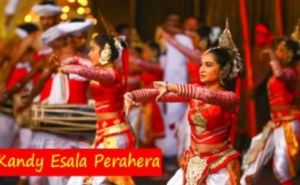
This festival is one of the most striking and magnificent. Celebrated by Sri Lankan Buddhists to pay tribute to the Buddha’s Sacred Tooth Relic enshrined in the Temple of the Tooth Relic (“Dalada Maligawa”) in Kandy. Perahera means procession in Sinhalese. The spectacular procession of fire jugglers, traditional dancers, drummers, and elephants dressed in elegant finery walking through the streets of Kandy city. Every day during a week in August, it is a great show both for local people who come from all over the country and for foreigners who come from many other countries. And it has a long historical significance stretching back to the 4th century AD.
This is one of the main events that have the biggest tourist attraction in Sri Lanka. Not just the procession, there are other unique rituals, including the “Kup situweema”, which is performed at auspicious times. Many literary works have been created on this important and fantastic ceremony to emphasize its significance.
3. Sinhala and Tamil New Year

This festival marks the dawn of the lunar new year and the atmosphere totally adapts and changes to welcome it. This usually takes place in mid-April. And the festive season is vividly supported by various unique rituals and celebrations with lots of tasty food and joyous games. This is celebrated throughout the country by Sinhalese and Hindus.
The entire island comes alive with flashy festivities and an energetic spirit. Everyone comes together to perform rituals such as blessing their children with herbal oils, having the first house party of the year with family, and visiting parents and grandparents. All of this is done during auspicious times. The fun quotient includes setting up firecrackers, performing traditional games, and includes traditional dance and music performances. This teardrop-shaped island becomes exciting on those days, full of hope, joy, and happiness.
2. Poson Poya festival

The second most important holiday celebrated in Sri Lanka by Buddhists. It is the poison play festival, held in June. It commemorates the advent of Buddhism on the island in the 3rd century by Arhat Mahinda in Mihintale during the reign of King Dewanampiyathissa.
It happened like that. King Devanampiyatissa was running after deer to hunt that day from Poson Poya. Many centuries ago, when Arahant Mahinda appeared to him in a grove on top of the mountain now known as Mihintale and called him by name. The King stopped chasing the deer and answered riddles about a mango tree and a family asked by the Arahant Mahinda. Later, he heard the teachings of Arahant Mahinda and agreed to follow the teachings of Lord Buddha.
From then on, he declared it the state religion. That is why Sri Lanka is considered the home of Theravada Buddhism. Elegant celebrations include lanterns, pandals, and alms stalls throughout the island in the true spirit of Buddhist culture. White-robed pilgrims watch the sil and spend the day in peaceful-minded Buddhist temples participating in Dhamma preaching, mediations, and other programs to educate people of Buddhist teachings.
1. Vesak Poya Festival

Vesak Poya is one of the most notable Buddhist festivals in Sri Lanka. It is celebrated to commemorate the three important milestones in the life of Lord Buddha: birth, enlightenment, and parinirvana. It is simply the triple celebration of Lord Buddha. As on Poson Poya day, white-robed Buddhist pilgrims observe sil, offer flowers and oil lamps, participate in meditation programs, and another Buddhist preaching by Buddhist monks.
The celebrations begin on Vesak’s full moon poya day in May. And they continue up to about a week. During the time filling homes, temples, roads, and shops with the magical light of colorful lanterns and pandals. In truth, the island becomes a kaleidoscope of elegant celebrations, especially around Lake Beire in Colombo. The sale of alcohol and fresh meat is generally prohibited during the week period of Vesak celebrations in Sri Lanka.
If you want to travel to the country, at least one of these vibrant cultural festivals in Sri Lanka is worth witnessing. Because it will become an unforgettable memory in your life!