Around the world, there are some species of snakes that are capable of causing harm or even death to humans. These species not only have a lethal bite of their own, but most of them are also considered poisonous snakes and cause the highest rates of human death due to their violent behavior and potent venom. This article illustrates and explains the 10 deadliest snakes currently known to exist, based on an analysis of both general toxicity and the potential for human mortality in the absence of drugs or an appropriate antivenom.
What are the deadliest snakes in the world? From the black mamba to the interior of Taipan, here are ten of the deadliest and most dangerous snakes on the planet.
10. Black mamba ( Dendroaspis polylepis)
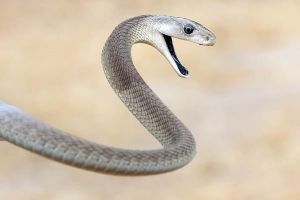
The black mamba is an extremely poisonous snake species found in sub-Saharan Africa. This particular snake can exist both in terrain and in trees that are generally found throughout savannas, woods, and woodlands. These snakes mainly depend on birds and other small animals. The mamba is also considered to be one of the longest deadly snakes in the world, measuring approximately 10 feet long and some have even reached lengths of nearly 14.8 feet. Their colors can vary to gray, olive, or dark brown, with adults being much darker than young mambas. Due to the color of its internal mouth, a huge black jaw that shows when threatened is one of the reasons why it acquires the name of the black mamba.
The black mamba, unlike other snakes, tends to cause multiple bites when attacking. Its venom, primarily a neurotoxin, induces symptoms in about 10 minutes and is fatal if treatments are not given quickly. Like many other venomous snake bites, a black mamba does not cause local swelling and necrosis but instead causes severe tingling, neurological dysfunction, blurred vision, and paralysis of the respiratory system. Not only that, but extreme drowsiness, the inability to speak, nausea, vomiting, and extreme sweating are also common.
9. Belcher’s sea snake( Hydrophis belcheri)
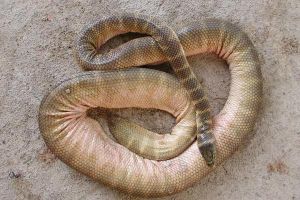
The Burping Sea Snake is an extremely poisonous snake and considered one of the most poisonous snakes in the world. The snake is relatively small in size; 1.5-3.3 feet long with a slim body and a yellow base with green cross bands. It commonly exists in the Indian Ocean, as well as the Philippines, the Gulf of Thailand, the Solomon Islands, and the northwestern coasts of Australia. The burp sea snake is so poisonous that a single bite can kill a victim in less than 30 minutes. Its venom consists of high levels of neurotoxins and myotoxins. It has been studied that one drop of its venom must be strong enough to kill 1800 people. Symptoms include extreme abdominal pain, extreme bleeding, kidney failure, and respiratory failure.
8. Philippine cobra ( Naja philippinensis)
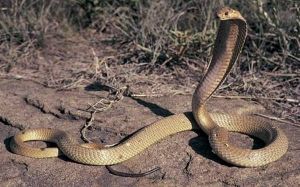
The Philippine cobra, which is a very poisonous species of snake, exists in the northernmost corners of the Philippine Islands. The species is quite robust and possesses a hood that can be raised when in danger. The average length of this cobra can reach about 3.3 feet and is most likely brown in color. These snakes have a neurotoxin that directly affects the respiratory system and the venom is extremely powerful. It is known to cause paralysis of the neuromuscular system.
Symptoms of a cobra bite often appear very quickly in about 30 minutes and these include vomiting, migraines, abdominal pain, dizziness, and also shortness of breath.
The poison itself is deadly, which means that potential treatments are not always successful and usually result in death. In addition to biting, the Philippine cobra even has the ability to spit its venom at potential victims, causing serious damage to the eyes resulting in permanent blindness.
7. Death Adder ( Acanthophis antarcticus)

The death viper is considered one of the deadliest elapid snakes found in Australia, New Guinea, and the surrounding region. This species has a snake-like appearance. Death vipers are quite short and can grow to be at least 1.3 feet long. They have triangular heads and small scales that adorn their bodies. They also have large fangs and can be reddish-yellow, brown, or greenish-gray. The death viper often stalks its prey and ambushes potential victims with ultra-fast attacks. It is very amazing how the death viper can hit its target and inject its venom in seconds.
The death viper, as its name implies, has a deadly neurotoxin that often causes paralysis and a complete shutdown of the respiratory system, ultimately leading to death within 6 hours. Although ant poisons have been developed, deaths still occur from their bites, as those ant poisons can only slow the progression of symptoms to a certain extent.
6. Russell’s viper ( Daboia russelii)

The Russian viper, also known as the chain viper, is a venomous snake found predominantly in Southeast Asia, China, Taiwan, and India. Vipers are quite common and are typically found in grasslands or wooded areas and tend to avoid wooded regions as well as salt marshes. One of the main food sources of the chain viper is rodents. As a result, these snakes are generally found around human settlements. Chain vipers composed of flat and triangular heads, together with rounded and raised snouts. Their color pattern is usually yellow, tan, and brown and can vary depending on the snake.
These deadly snakes can extend their length up to 5.5. Feet. Chain vipers produce a significant amount of venom in their bites, which are deadly to humans at doses between 40 and 70 milligrams. Symptoms usually include excessive bleeding, rapid drop in blood pressure, vomiting, kidney failure, and also blood clotting. Although an antidote is available, the pain when biting often continues for about four weeks and ultimately causes severe tissue damage.
5. Blue krait ( Bungarus candidus)

The blue krait is also a very poisonous snake from the elapid family. It can grow to at least 3.6 feet long and maintains a color pattern of bluish-black cross bands that are separated by yellowish-white intervening spaces. The blue krait is primarily found in Southeast Asia, including Indonesia, Thailand, and often near rivers, lakes, and ponds. It feeds mainly on mice, other snakes, and small rodents. The venom of the blue krait is very powerful and consists of extremely powerful neurotoxins that have the ability to paralyze the muscular system of the victim, resulting in the inability to speak or think clearly also when attacking the respiratory system causes suffocation and results in the inability to breathe.
4. Inland Taipan (Oxyuranus microlepidotus)

The Taipan is considered today as one of the deadliest snakes in the world due to its severity in venom. It can reach up to 5.9 feet in length and is primarily dependent on rats along with other small animals. The Taipan resides mainly along the northeast coast of Queensland, as well as in the southern part of Papua New Guinea. Its venom contains a high level of neurotoxins and even just one bite can cause headaches, seizures, and respiratory paralysis within 1-2 hours.
3. Eastern brown ( Pseudonaja textilis)
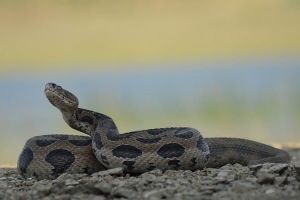
Eastern browns reside in almost all environments except the dense forests around Australia and southern New Guinea. They are more common on farms, as they mainly consume house mice.
This extremely deadly snake is quite slim in appearance and can reach an average length of 5.0 to 6.6 feet. As the name implies, oriental brown is typically brown in color and can also have a blackish appearance. They are well recognized for their small fangs, dark tongues, and dark black eyes. They tend to be more active during daylight hours. The venom of this snake is extremely deadly, but the bites of this snake have been researched to have a fairly low mortality rate, about 10%, as the snake does not usually deliver a large volume of venom with each bite. Symptoms include a sudden drop in blood pressure, severe bleeding, heart failure, and kidney failure. Depending on the amount of venom injected during the sting, some people can develop symptoms very quickly in a matter of minutes.
2. Tiger snake ( Notechis scutatus)

The tiger snake is another highly venomous snake that exists throughout southern Australia and Tasmania, particularly in coastal regions, wetlands, and salt marshes. Depending on their location, these snakes are made up of a wide variety of colors such as olive, yellow, orange, brown, and black. It can reach its length up to 3.9 feet. Taking into account the venom of the tiger snake, it is composed of very powerful myotoxins, neurotoxins and coagulants. Symptoms of your bite can include extreme neck and foot pain, paralysis, and, of course, shortness of breath. Fortunately, there is an effective anti-poison and it can be life-saving if provided on time.
1. Rattlesnake ( Crotalus scutulatus )

The rattlesnake, also known as the Mojave green, is one of the deadliest and most venomous pit viper species. It lives mainly in the desert regions of the southwestern United States and also in central Mexico. Most rattlesnakes grow to about 3.3 feet long. The color of the snake ranges from light green to brown, allowing it to easily blend in with the nearby environment. However, rattlesnake bites often have late symptoms, but vision problems, muscle weakness, and difficulty swallowing can appear within hours. Furthermore, the venom often causes shortness of breath and thus leads to respiratory failure and ultimately death. Additionally, deaths are relatively rare now due to the discovery of a CroFab anti-venom that provides highly effective neutralizing effects.