Zoonotic diseases are transmitted naturally from the affected animal to the human. Zoonotic diseases are common throughout the world. Scientists estimate that more than 40 percent of the infection is transmitted through domestic or wild animals. Numbers of parameters that can be used to prevent the spread of zoonotic diseases such as; Use of gloves when handling the infected animal. Justinian’s first plague epidemic began in the middle of the 6th century in the Byzantine Empire.
The zoonotic disease can be spread through direct contact and bodily fluids such as the blood saliva of an infected human or animal. The zoonotic disease can be transmitted by indirect contact, for example; A person is bitten by an arthropod vector, such as a mosquito, that has picked up a pathogen from infected animals. Zoonotic disease is caused by harmful germs such as viruses, bacteria, parasites, and fungi that can range from mild to severe infection. It depends on the severity of the germs, as if a person bit a mad dog, it would be lethal if treatment was not started in time.
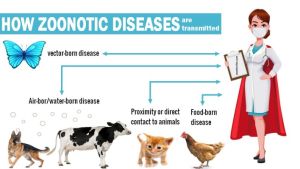
Most Common Zoonotic Diseases: Disease Transmitted from Animals to Humans.
1. Rabies
It is a viral infection caused by the Lyssavirus of the rhabdovirus family. Transmission of the virus through the saliva of the infected animal to the tissue, causing inflammation of the brain. It could be fatal if the treatment protocol is not followed correctly.
Initially, it started with a fever and tingling at the site of exposure. Uncontrolled excitement, irregular movements, fear of water, and loss of consciousness. The incubation period can be from four days to six years depending on the location of the wound and the amount of virus introduced.
Ninety percent of rabies is spread in humans through the bite of a domestic breed of dog. The recommended vaccination in domestic animals covered this risk by up to ninety percent. An immunological technique is required to identify rabies antigen (FAT). The only treatment solution is the rabies vaccination protocol.
The immediate step that had to be taken in the event of an animal bite, wash the affected area with a disinfected solution for five to ten minutes and apply a bandage. Call the animal owner and ask about the pet’s vaccination schedule. Consult your doctor immediately.
2. Anthrax disease
It is a bacterial infection caused by Bacillus anthracis that can be transmitted by direct or indirect contact with the infected animal. There are four human anthrax infection farms; Skin, gastrointestinal, lung, and injectable.
Cutaneous anthracis is when a carbuncle occurs on the skin. It is the most common farm with low mortality and presents as a boil-like skin lesion. Anthrax outbreak between heroin injection in Glasgow, December 2009, resulting in 14 deaths.
Diagnosis can be made by laboratory tests, computed tomography, chest x-ray, and biopsy of the skin lesion.
3. Pasteurellosis
It is a zoonotic disease caused by infection by bacteria of the genus Pasteurella. Pasteurella multocida, the most common bacteria reported in this group, is normally found in the upper respiratory tract of all species. It is transmitted by animal bites, scratches and leads to meningitis, eye infection, and respiratory infection.
Diagnosis on the basis of laboratory tests and immediate treatment, clean the infection with disinfectant, and prescribe an antibiotic.
4. Listeriosis
A foodborne illness caused by the bacterium Listeria monotones that acts as an intracellular parasite. It could be fatal with meningitis and septicemia. It is transmitted by different routes, but it can be transmitted between people during sexual activity. The most susceptible people are pregnant women, newborns, and people with weak immune systems.
Diagnose on the basis of blood and cerebrospinal fluid tests in the presence of bacteria. The antibiotic can help you recover from the infection.
5. Cat scratch disease (CSD)
It is a bacterial disease caused by Bartonella henselae that often results from the scratch or bite of a cat. Also, it is usually spread through contact with flea feces. Symptoms are usually swelling of the lymph node closest to the scratching site, headache, fever, and reproductive difficulty.
Correctly diagnosed on the basis of the isolation and identification of the bacteria. The wound site must be completely clean. And antimicrobial therapy can be used. The affected person should be kept away from young cats.
6. Q fever
Consultation fever is a disease caused by Coxiella burnetti. It is transmitted through blood transfusions and sex. People can be affected by breathing dust that has been contaminated with milk, urine, and birth products.
Q fever causes flu-like symptoms. Recovery may be possible on its own, but through antibiotics, it will be helpful to avoid secondary infection. Blood tests can diagnose Q fever.
7. Cryptococcus
It is an infectious fungal disease caused by a pathogen that can jump from an animal to a human. It is a deadly fungal infection that damages the lungs and can lead to pneumonia and meningitis. The main source of the spread of this disease is the inhalation of fungi that are found on many faces of birds. Treatment was started with an antifungal medication (itraconazole, fluconazole).
8. Lassa fever (LHF)
It is a viral hemorrhagic fever caused by the Lassa virus. Rodents shed the virus through urine and droplets, direct contact with materials, and inhalation and ingestion. Mild symptoms include; Fever, weakness, and headache.
Diagnosed by enzyme-linked immunosorbent serological assays (ELISA). The PCR technique can also be used in case of early infection. Therefore, avoid direct contact with the infected person by taking preventive precautions.
9. Crimean-Congo hemorrhages fever (CCHF)
It is a viral hemorrhagic fever caused by a virus from the Nairo virus group. It is transmitted through the bite of an infected tick and direct contact with blood and body fluids. Sign symptoms; Neck pain and stiffness, petechial rash, and bleeding gums. Diagnosed with PCR for nucleic acid detection, virus isolation, and antibody detection method.
10. Rift valley fever (RVF)
It is one of the most common zoonotic viral diseases. It can also be transmitted through the blood and organs of infected animals. The incubation period for RVF ranges from 6 to 10 days. This disease usually presents in three forms; Occult, hemorrhagic form, and meningoencephalitis. Diagnosed this disease by PCR and ELISA test.