When a case goes to trial, the verdict can never be certain due to all kinds of variables. Ordinary witnesses can be unpredictable. Even expert witnesses may become less informed than previously thought. Sometimes lawyers, and even judges can have a bad day. Evidence is generally the most reliable aspect of a trial. However, this evidence is also not always what it appears to be initially. Here are 10 cases where the surprise evidence presented in court led to some unexpected verdicts.
10.Jonathan Aitken’s Plane Tickets

In 1993 Jonathan Aitken was a government minister in the United Kingdom when The Guardian alleged that a Saudi businessman had paid the bill for the Aitken hotel in Paris. This went against the rules of the UK government. After increased coverage in 1995, Aitken sued The Guardian and Granada Television for defamation. He announced his intention to sue at a press conference with these fateful words: “If it behooves me to start a fight to eliminate the cancer of journalism bent and twisted in our country with the simple sword of truth and the faithful shield of the British fair play, so be it. I am ready for the fight. ”[1] In fact, fighting words. As the newspaper clung to his story, the politician maintained that his wife had paid her bill at the Ritz in Paris. However, The Guardian journalists believed that Ms. Aitken had been in Switzerland when her husband was in Paris. Then Guardian reporter Owen Bowcott traveled to the hotel where he was thought to have stayed.
Bowcott obtained evidence that Mrs. Aitken had stayed at the hotel. She found the American Express receipt for the room with her signature. This showed that she had paid her bill the same day she was supposed to be in Paris. At the libel trial, Jonathan Aitken tried to come out with a convoluted story about his wife and mother-in-law. But the more he lied, the more he got into a false narrative. Finally, the Guardian’s attorneys found airline tickets for Mrs. Aitken and her daughter’s direct flight from London to Geneva. The return information for the rental car from Geneva airport showed that Ms. Aitken was not in Paris paying the Ritz bill on the date in question. The defamation case collapsed. Jonathan Aitken was found guilty of perjury and perverting the course of justice. He was sentenced to 18 months in prison.
9.Mel Ignatow’s Photos

In 1988 Mel Ignatow murdered his girlfriend, Brenda Schaefer. Although her body had not been found, Ignatow agreed to testify during a 1991 grand jury hearing in an effort to clear her name. Unfortunately, he mentioned an ex-girlfriend, Mary Ann Shore, prompting investigators to question her. After reaching an agreement with prosecutors, Shore confessed that he had taken photos of Ignatow raping and murdering Schaefer. Shore also brought police to the body, which had been buried for over a year and was severely decomposed. Shore agreed to use a cable to record Ignatow’s confession. However, at trial, the jury found that Shore’s evidence was unreliable. Ignatow’s lawyer suggested that she had been the murderer and was now trying to blame it on Ignatow.
Ignatow was eventually acquitted, but it came at a price. He had to sell his house to pay the legal expenses. Six months after the acquittal, a house worker found incriminating photos taken by Shore, as well as personal items that had belonged to Schaefer. Prosecutors were unable to re-try Ignatow for murder due to double-risk laws. They then charged him with perjury for his false testimony before the grand jury. Knowing that he could not be punished for the murder, Ignatow confessed to the murder at his perjury trial. In court, he even went to the victim’s brother to tell him that Schaefer had died “peacefully.” Ignatow was sentenced to eight years for perjury.
8.Ross Ulbricht’s Tracking Number

Ross Ulbricht was a young entrepreneur who quickly discovered a gap in the market and exploited it. Without fanfare, he launched a website called Silk Road on the dark web in 2011. Ulbricht customers were selling drugs, passports, and, oddly, counterfeit grocery coupons in his darknet market. He took a commission on each sale and is believed to have earned more than $ 13 million. Ulbricht, who used the screen name “Dread Pirate Roberts”, was a success. So much so that it attracted the interest of the FBI. They began to build a case against Ulbricht. When an ecstasy pill was found at Chicago O’Hare Airport, it was deemed important because the packaging suggested it came from a commercial website. As the researchers continued to search, they found dozens of packages, each containing small amounts of medications shipped directly to the clients’ homes.
They then made a trial purchase of small plastic bags from Silk Road. Although of little value, the package came with a tracking number. FBI investigators were able to trace the credit card and terminal used to pay for shipping charges and found a CCTV camera that overlooked the terminal. One of the Ulbricht vendors was caught and gave investigators access to his Silk Road vendor account. After that, it was only a matter of time before Dread Pirate Roberts was caught as well. Ross Ulbricht received a double life sentence plus 40 years without the possibility of parole. He was 31 years old.
7.Maria Vargas’s Underwear

In 1994, the maid Maria Vargas made a complaint of harassment against the wealthy investor Nelson Peltz, which she denied. She also claimed that she and her butler husband, who had worked for Elliot Management Services (which existed to hire domestic servants for Peltz), were fired after they opposed their “hostile work environment.” The company claimed that the couple had been fired for stealing. During her statement, Maria Vargas swore under oath that her boss had bought her an inappropriate gift (a pair of panties) and asked her to pose for him. She produced the item for inspection, drastically taking them out of her bag and tossing them on the table. [4] When asked if those panties were the real ones her boss gave her, she said yes. As for when he had given her this gift, she claimed it was in September 1992. However, when defense attorneys investigated, they discovered that this brand of underwear had not been sold by the manufacturer until November 1993. Fearing that her case was falling. Additionally, Vargas said her employers had fabricated a letter from the United States Department of State to prevent her from testifying.
According to Vargas, the letter required that he go to Costa Rica for an immigration appointment during the time the case was scheduled. He also presented the letter as evidence. The letter, which was genuine, had resulted from Vargas’s own request for a green card. It was a completely normal part of the application process, which she knew. The court dismissed all of Vargas’s claims with prejudice. This meant that they were not allowed to file another lawsuit against Peltz or Elliot Management Services for the same reasons. According to a court transcript, US District Judge Kenneth Ryskamp stated: “This case is outrageous. It is one of the most serious court frauds I have ever seen. [. . . ] This case will be dismissed for the fabrication of evidence, perjury, obstruction of justice. ”
6.Jeffrey Archer’s Appointments Diary

In 1987, Jeffrey Archer, a former deputy, member of the House of Lords and best-selling author, sued a newspaper for alleging that he had paid a prostitute to skip the country to avoid media scrutiny. In court, he explained that the £ 2,000 he had given him was not secret money. Instead, it was a philanthropic act. As unlikely as it sounds, Archer won that case. In large part, it was due to the judge’s comments about Archer’s wife, who had testified in defense of his husband. Addressing the jury, the judge said: “Does it have elegance? Does she have a fragrance? Would it have, without the strain of this judgment, glow? ”[5] It was clear that the judge thought that the answer to all these questions was yes. He then asked the jury why Archer would want “cold, loveless, rubber-insulated in a seedy hotel” when he could go home to his fragrant wife. Archer received £ 500,000 in damages, which he said he would donate to charity. In 1999 Jeffrey Archer announced his intention to run for the London mayoralty. Subsequently, a newspaper interviewed a former friend of Archer’s who alleged that Archer had committed perjury in the defamation trial.
Archer immediately withdrew his candidacy, but it was too late. He was charged with perjury and with perverting the course of justice. His influential friends began to abandon him. At his new trial, his former secretary identified Archer’s actual newspaper, which was not the one presented as evidence in his original defamation case. That diary had been falsified by Archer’s instructions. The secretary had saved her memorandum on changing the newspaper as “safe”. At Christmas after the first trial, the secretary received a Christmas voucher, the only one she had received. In 2001 Jeffrey Archer was convicted of perjury and perverting the course of justice. He was sentenced to four years in prison and used his time in prison to focus on his writing. He remains a member of the House of Lords.
5.Hartford-Empire’s Magazine Article
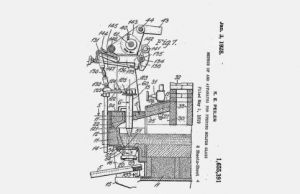
In 1926, the Hartford-Empire Company filed a patent application for a method of pouring glass into molds that were known as “gob feeding.” As supplemental information, the company also featured an article in a trade magazine, purportedly written by an “independent expert,” who described its gob-feeding machine as a “notable advance.” Hartford-Empire received the patent. In 1928, they filed a lawsuit against the Hazel-Atlas Glass Company for infringing this patent, which made headlines for Hazel-Atlas. They had been making glass the same way for a long time. Hartford-Empire lost its first case. But the company appealed, once again citing the magazine article as proof of its intellectual property rights. The appeals court found in favor of Hartford-Empire. However, Hazel-Atlas management was suspicious and hired investigators to determine who had actually written the article. They interviewed the independent expert, who insisted that he was the author but refused to “stun” by signing an affidavit.
The Hartford-Empire attorney was more successful. He managed to persuade the expert to sign an affidavit, prompting Hazel-Atlas to agree. They paid Hartford-Empire $ 1 million in damages and signed an ongoing license agreement. [6] The “expert” then requested a payment of $ 10,000 from Hartford-Empire. Instead, they gave him $ 500 and told him to leave. About a month later, they made another payment of $ 7,500. Both payments were made in cash. Although this may seem like a reward, Hartford-Empire insisted that they simply felt a “moral obligation” to reward the expert for their help. When Hazel-Atlas appealed to the Supreme Court, the payments were revealed, the true author of the article was exposed as Hartford-Empire’s own attorney, and the patented gob-feeding machine was determined to be no different than any another person. The court’s written opinion also said: “To grant full protection to the public against a patent obtained by fraud, that patent must be vacated
4.Salim Aoude’s Purchase Agreement

In the 1980s, Salim Aoude ran a franchised service station in Massachusetts, but he imagined himself running an entire chain of them. Unfortunately for him, the franchise owner, Mobil, had a clause in his contract that prevented a franchisee from running more than one station at a time. When the franchisee of a nearby service station decided to withdraw, Aoude saw an opportunity. He negotiated directly with the other franchisee, John Monahan, and took possession of the new service station. To try to disguise the property, Aoude arranged to use Monahan’s account in Aoude’s transactions with Mobil. He hoped that Mobil would accept the fait accompli when they finally discovered it. They did not. Although Monahan offered to undo the sale, Aoude was unable to relinquish his dream and kept control of the station. He decided to sue and submitted a copy of the purchase agreement, which was false
Aoude’s case was dismissed, and Mobil informed Monahan that their franchise was being terminated. Aoude sued again with the same case but with a different purchase agreement. He said that this was a genuine document. The first one had shown an inflated purchase price, but this new one was supposedly the real deal. After a protracted legal battle in which each party requested injunctions, the court found in Mobil’s favor. Aoude attempted to invalidate the ruling for technical reasons, which was rejected. The appeal, the court said, “trenches against the frivolous.”
3.Thomas Jennings’s Fingerprints

In 1910, Clarence Hiller, a railroad employee, was killed at his Chicago home after facing an intruder. The assailant, Thomas Jennings, was detained 0.5 miles from the crime scene wearing bloodstained clothing and carrying a weapon. He had been paroled just six weeks earlier. [8] During the crime, Jennings left his fingerprint on a recently painted railing at Hiller’s home. Although interest in the new science of fingerprinting had been growing for a time, Jennings would be the first person convicted in a criminal trial in the US based on evidence of fingerprints. Jennings’ defense team questioned the legality and reliability of the evidence. They fingerprinted the public to try to demonstrate that the fingerprints were not unique. Then an experiment in court went disastrously wrong when the defense attorney challenged experts to lift their tracks from a piece of paper, and they did. Despite an appeal that focused primarily on suspicion of this new science, Jennings was sentenced and sentenced to death.
2.Kwame Kilpatrick’s Text Messages

In 2008, Kwame Kilpatrick was mayor of Detroit when he was charged with perjury and misconduct in public office. Kilpatrick had been investigated after a wild party at his mayor’s house in 2002 involved strippers. His wife came home unexpectedly and allegedly ended the party by physically attacking Tamara Greene (also known as “Strawberry”), one of the exotic dancers. When Greene was found shot to death in April 2003, an investigation was launched into the mayor’s conduct. In 2003, two investigators claimed they had been fired because their investigation into Kilpatrick’s behavior had uncovered his extramarital affair with Christine Beatty, his chief of staff. Kilpatrick testified under oath that this was not true. The city of Detroit finally settled the whistleblower complaint out of court for $ 8.4 million.
In 2008, Detroit Free Press published details of 14,000 text messages between Kilpatrick and Beatty. They proved that Kilpatrick had been having an affair and had perjured himself by testifying during the whistleblower lawsuit. Further investigation uncovered corruption on a large scale. Kilpatrick was found guilty and sentenced to four months in prison. After his release, he was involved in more criminal activities. In 2013, Kilpatrick was convicted of multiple charges, including extortion, extortion, and tax evasion. For these crimes, he was sentenced to 28 years in prison.
1.Sheila Dixon’s Gift Cards

Not all criminals think big. Take Sheila Dixon, for example. Born and raised in Baltimore, she served many years at the Baltimore City Hall, where she was said to be appreciated and respected. Then, as chair of the council, she succeeded Martin O’Malley as mayor of Baltimore in 2007, when he resigned after being elected governor of Maryland, but his term was short. In 2009, Dixon was charged with 12 corruption-related charges, including robbery-related charges. Throughout the case, Dixon protested her innocence. [10] When the jury finally reached a verdict, Dixon was found guilty of a single charge, embezzling gift cards worth $ 530. The cards had been intended for Baltimore’s needy. As part of a plea agreement, Dixon resigned from the mayor in early 2010 and agreed not to seek a position while on probation. However, she has tried to regain her political career ever since. For example, in the 2020 primaries, she narrowly missed the Democratic nomination for mayor of Baltimore. Brandon Scott, city council president, won by just over 3,100 votes.