
Since the beginning of human civilization, literature has been a crucial part of society. It not only reflects the condition of the society of the time but also shapes its future. This important role of literature means that it has always been surrounded by controversy. In fact, in ancient and medieval wars, the destruction of a culture’s literature was an important tactic to destroy and dominate the culture itself. The burning of libraries meant the burning of entire systems of cultural knowledge.
Although, in modern times, we do not see the destruction of literature on such a large scale. There is no doubt that it has been the subject of various controversies. Political, social, and ethical reasons are at the center of this outrage.
In India, which has a long literary tradition, from the ancient Vedas to the modern novels, the case is no different. Many literary works have been controversial and, in many cases, banned by the government. Here are 10 books so controversial that they were banned in India.
10- The Myth of the Holy Cow, by D.N. Jha
This book, by cultural historian and professor Dwijendra Nath Jha, generated controversy over its subject. Published in 2001, this book uses ancient Vedic, Buddhist, and medical texts to assert that eating beef was not taboo in ancient India. Hindus believe that the cow is sacred. And therefore, refrain from eating beef, as many states in the country prohibit the slaughter of cows.
But Jha argues that this is a fairly modern practice, only beginning in the 19th century. This hurt the feelings of the Hindus. And the book was banned by the Hyderabad Civil Court for offending religious sentiments and the author was even reported to have received death threats.
9- Great Soul: Mahatma Gandhi and His Struggle With India, by Joseph Lelyveld
Joseph Lelyveld was executive editor of the New York Times and his book, “Move Your Shadow; South Africa, black and white ”based on his reporting in South Africa had won the 1986 Pulitzer Prize for general non-fiction. However, his book on Gandhi, published in 2011, was the subject of significant controversy.
Mohandas Karamchand Gandhi, popularly known as Mahatma Gandhi, is considered the “Father of the Nation” in India. The currency and many government institutions still bear his portrait to symbolize his importance. Therefore, when Lelyveld published his book, talking about Gandhi’s relationship with German Jewish bodybuilder Herrmann Kallenbach, it generated controversy. Homosexuality was a crime in India until September 2018. And thus the implications of the nation’s father’s homosexuality caused outrage.
Although Lelyveld stated that “the book does not say that Gandhi was homosexual or bisexual. He says he was celibate and deeply attached to Kallenbach. ”The Assembly of Gujarat, Gandhi’s home state, unanimously banned the book in 2011.
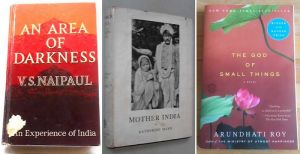
8- The God of Small Things, by Arundhati Roy
Arundhati Roy’s first novel was a stellar success when it was published in 1997. It became a worldwide bestseller and also the winner of that year’s Man Booker Award. Set in the rural town of Ayemenem in the southern Indian state of Kerala, the narrative follows the relationship between fraternal twins Estha and Rahel and also their mother, Ammu, with the lower caste “Untouchable” Velutha. . It is an incident in the last plot that generated controversy.
In June 1997, Sabu Thomas, a lawyer, filed a public interest petition alleging that the novel was obscene and likely to corrupt or deprave the minds of readers. He wanted to remove the final chapter, in which there is a lyrical description of a sexual act between Ammu and Velutha. There were also other controversies surrounding incest and pedophilia.
However, the book was a success, being named one of the best books of the year by TIME. And also included in a list of the 100 most influential novels of all time by BBC News. Roy didn’t release another novel until 2019, but both the author and her works continue to divide the consensus.
7- The Polyester Prince: The Rise of Dhirubhai Ambani, by Hamish McDonald
Written by an Australian writer and journalist. The book was a biographical chronicler of the rise of business magnate Dhirubhai Ambani, from his humble beginnings to his successful position. And he also spoke of the controversies and accusations that were made against him.
The Ambanis threatened legal action against the book even before its publication. Due to such pressure, Harper Collins India publishers decided not to publish the book in India.
6- Rangila Rasul, by Pandit Chamupati
This book is an example of one of the first cases of controversy. Community conflicts between Hindus and Muslims in India have been constant throughout the nation’s history. Rangila Rasul was initially published anonymously in 1923, amid a period of conflict between Muslims and the Hindu Arya Samaj in the northern Indian state of Punjab.
The title of the book alludes to the content, which describes the marriages and sex life of the Prophet Muhammad, which many Muslims found highly offensive. “Rangila” means colorful and “Rasul” means prophet. The publisher, Mahashay Rajpal, refused to reveal the author’s name and he was consequently imprisoned and later murdered. The book is still banned, not only in India but also in Pakistan and Bangladesh.
5- Shivaji: Hindu King in Islamic India, by James W. Laine
Shivaji Bhonsle was a leader in the state of Maharashtra, where he led the genesis of the Maratha Empire. He regained prominence and his legacy was remembered during the Indian Independence Movement against the British. Cited as a proto-nationalist and Hindu hero, the king has been instrumental in the history and politics of India.
When scholar, professor, and writer James Laine published his novel, he was criticized for his claim that Shivaji’s story was a Hindu one against a constructed Muslim enemy. This sparked protests from Marathas in Shivaji’s Legacy State, Maharashtra. In view of the attacks and public disturbances, the book was banned in the state of Maharashtra in January 2004.
After a revision to the text, the ban was lifted and the court upheld the lifting, prompting more protests.
4- The Hindus: An Alternative History, by Wendy Doniger
Hinduism is one of the largest and oldest religions in the world. The hierarchical caste system has been a part of a religion that has been the subject of criticism and controversy from ancient times to modern times.
So when American Indologist and Sanskrit scholar Wendy Doniger published the book, it caused widespread controversy. The book aims to tell an alternative history, as opposed to the dominant Brahminical, patriarchal, and orientalist narrative. Use the perspectives of women and lower castes to tell her story.
Consequently, the book was banned for “deliberate and malicious acts intended to outrage the feelings of any religious community” in February 2014, sparking discussions about the state of free speech in the nation.
3- The Face of Mother India, by Katherine Mayo
This is another early case of controversy, set in the pre-independence era. Katherine Mayo was an American researcher and historian who supported white nationalism. Her 1926 book of hers written after a trip to India documented various regressive practices of the Hindu religion such as; Child marriage and treatment of women and lower castes. She opposed the idea of the independence of India from the British colonial administration. And she claimed that India would be better off under “civilized” British colonial rule. In India, the book was the subject of protests and was burned. Mahatma Gandhi, who is no stranger to the controversies, criticized the author’s narrow ideological propaganda, calling it “the report of a sewer inspector sent for the sole purpose of opening and examining the sewers of the reported country.”
2- An Area of Darkness, by V.S. Naipaul
The Nobel Prize-winning writer of Indian origin, born in Trinidad and Tobago, recounts his first visit to his ancestral land. This travelogue, the first in the trilogy that includes India: A Wounded Civilization and India: A Million Riots Now.
The book conveys a pessimistic, disappointed, and disappointed sentiment that the author felt on his travels. The book was immediately banned in India for its “negative description of India and its people.” Later, the Indian poet Nissim Ezekiel wrote the 1984 essay “Naipaul’s India and Mine” in response to Naipaul’s An Area of Darkness in which he calls Naipaul’s observation a break from his idealized image of India.
1- The Satanic Verses, by Salman Rushdie
Following the Man Booker award-winning blockbuster novel Midnight’s Children, Rushdie’s fourth novel, The Satanic Verses sparked a lot of controversies. In the novel, Rushdie talks about verses that were removed from the Koran, which included; Verses where the Prophet Muhammad mentions three pagan goddesses, whom he describes as mediums of God. This, along with the general description of Islam, was considered blasphemy by Muslims around the world.
The novel made headlines when in 1989; Ayatollah Ruhollah Khomeini, then Supreme Leader of Iran, issued a fatwa calling for Rushdie’s death and forced him into hiding for several years. The book was banned in India for allegedly promoting hate speech against Muslims. And it remains one of the most controversial literary works of all time.