Dinosaurs are pop culture favorites and it’s easy to see why. They fought epic battles with horns, teeth, and claws more terrifying than any weapon. They seemed wilder and sometimes crazier than any beast imagined in any fiction. And they were all real. But we have had the misfortune (or perhaps the fortune) of missing them for about 65 million years. So we only see the real dinosaurs in flashes. Glimpses that are sometimes so strange or dark that they do not become the prehistoric representation of pop culture.
10. Dinosaurs were covered in dandruff
 \
\
Feathered dinosaurs spew large amounts of dandruff. A disgusting but fascinating fact that reveals that dinosaurs did not shed their skins like an old suit, as lizards do. Instead, dinosaurs shed their skin piece by piece, in the form of dandruff. The Middle Jurassic period experienced a proliferation of feathered dinosaurs, whose successors gradually transformed into birds. As feathers evolved, so did dandruff, and fossil feathers are riddled with scales of fur. Modern birds also flake, but the flakes are loaded with fat and act as a biological cooling system that traps and dissipates heat during flight. Dinosaur dander is similar to that of birds and humans. It is made up of keratin, the tough, stringy protein that makes hair, horns, and hooves. But the dinosaur dander is devoid of fat, an indicator that its owners still couldn’t fly. And so dandruff has become an unlikely ally revealing what prehistoric creatures could take to the skies
9. Mother dinosaurs formed bird-like birthing colonies

Dinosaurs don’t get much credit for sociability. But imagine this: nesting dinosaur colonies, working together to protect their unhatched babies, just like the birds they would later become. That poignant image is painted by a collection of 80 million-year-old clutches found in the Gobi Desert. The discovery contained 15 clutches with a total of at least 50 eggs. The flood long ago that preserved them so fortuitously also left another memory, a continuous red stripe of sediment on the eggs, dating back to the same nesting period. The responsible theropods (raptor dinosaurs) showed a popular birthing behavior among today. birds and crocodiles. But the dinosaurs were doing it before the evolutionary division (aided by an asteroid) that produced birds. Overall, community upbringing apparently worked as well as it does now. More than half of the nests showed signs of at least one successful hatching, on par with crocodile and bird success rates.
8. The goofiest dinosaurs were also the toughest

The beak-billed, crested-headed, and hump-headed herbivores known as hadrosaurs are highly overrepresented among skin-retaining fossils. Hadrosaur skin (actually the fossilized impression of it) is preserved more frequently and in greater abundance than any other skin. Two reasons were offered. Perhaps hadrosaurs lived and died near rivers, where they were more likely to become covered with sediment and become fossils. Or perhaps they were simply more abundant. But hadrosaurs are everywhere. And there are plenty of hadrosaur fossils that retain the skin, even when outnumbered by other species.
So the researchers offered a new explanation: Hadrosaurs had the toughest skin of all. One study looked at nearly 200 reports spanning the 1840s to 2010. It found that of the 123 fossils of the dinosaur body that retained some skin, nearly half (57) belonged to hadrosaurids. Another study focused on the fossils found in the Hell Creek Formation. Of the 22 dinosaur fossils that showed skin, 20 of them were from hadrosaur relatives. Of all the specimens studied, one even had “enough skin to wrap a car.
7.T-Rexes were too slow to chase you down

With its supposed Olympic sprinter-level speed, the T-Rex could overcome and brutalize almost any creature. Except for a (slightly) above-average human runner, meaning the researchers studied more than 500 species, including whales, to determine how size is related to speed. The biological limiting factor is oxygen, or more specifically, the lack of it. Sprinting is an anaerobic exercise and rusting of fuel sources cannot happen fast enough to keep you going for long. And larger animals deplete their fuel oxidation capabilities even faster. Therefore, while previous science credited the Tyrannosaurus with a terrifying top speed of 45 mph, its prodigious size would have limited it to a jog, at best. Your new, more accurate top speed? A modest 16.5 miles per hour. It’s not that scary, considering that the average human can reach sprint speeds of 15 mph
6. Some dinosaurs were unbelievably small
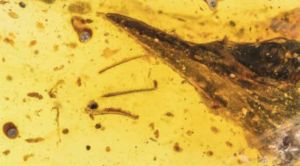
Some of the most amazing dinosaurs were also the smallest. One of those creatures, recently found in a 99 million-year-old Mesozoic fossil from Myanmar, could be the smallest dinosaur in history. It is a small teacup dinosaur named Oculudentavis khaungraae. And scientists so far have only found his decapitated head, preserved in resin. But what ahead – it’s only half an inch long and hummingbird-shaped, though it’s smaller than any modern h-bird. And it teeters on the threshold between the past saurian and the future avian. He has lizard eyes, suggesting he was active during the day. But it also has a mouth full of teeth, like a dinosaur. The combination of features makes this tiny bird-o-saur one of the missing links that connect dinosaurs and birds. Khaungraae also exemplifies how dinosaurs managed to survive for more than 150 million years. They used all adaptation strategies, such as growing small and taking advantage of the resources that their gigantic brothers reject.
5. Dinosaurs were plagued by feather-eating parasites

Feathered dinosaurs may have been grooming continuously, like birds, to get rid of an infestation of feather-eating parasites. It is a story as old as time: as soon as a niche opens, evolution creates something new to fill it. Many times at the cost of something else. And when dinosaurs sprouted feathers, they soon became lice-like insect pests that fed on those feathers. These insects are so small and fragile that they rarely fossilize. Of the thousands of amber samples, the researchers recently found the lice, locked in Burmese amber 100 million years old. Inside the amber were two dinosaur feathers. And they seemed to be chewed. Looking closer, the researchers found 10 prehistoric errors and called them Mesophthirus Angeli. Mesozoic feather chewers only have about two widths of human hair in length, probably because they were babies also known as nymphs. But the wouldn’t have grown much, maybe just 0.02 inches long
4. Dinosaurs didn’t inhabit every part of the Earth

Dinosaurs were apparently everywhere. They tyrannically ruled every part of the Earth and subjugated our mammalian ancestors. But for approximately 30 million years after its appearance (240 million years ago), dinosaurs were unable to populate the equator, only a small and select carnivorous contingent could inhabit the lower latitudes. The researchers mapped the ancient ecosystem by looking at carbon levels in the soil and plants, flora diversity, carbon, and fossil records. It turns out that the equator was hell on Earth. Wild climatic changes spread from one side to the other, removing moisture and transforming fertile climates into arid wastelands. The intense heat caused droughts and raging forest fires. The fires cleared the land, damaged the soil, and increased erosion, leaving no vegetation for the huge, herbivorous, long-necked sauropods that dominated other latitudes. This vision of the past could be a vision of the future. Atmospheric CO2 levels were up to six times higher than today. And the latitudes of the middle world resembled those of the western United States, parched and in the sun. With this resource shortage, only the smallest and most thrifty dinosaurs could survive near the equator.
3. Early dinosaurs laid leathery, soft-shelled eggs
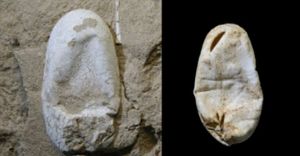
For a time, all recovered dinosaur eggs were of the hard-shelled variety. But that’s only because they were more likely to survive. It turns out that dinosaurs started by laying soft and soft eggs. And it was not just some species that laid eggs with soft shells. Molecular analysis tells us that all of the first dinosaur eggs were not mineralized. Instead, the tiny embryos inside were wrapped in leather covering, like today’s turtle and snake eggs. To ensure their babies survived, the dinosaurs buried their claws and allowed them to incubate underground, but evolution eventually and randomly added calcium to the mix. Calcification made the eggs harder and hard-shelled, less like reptile eggs and more like bird eggs. And evolution favors the reuse of proven designs. So, the change from hard to soft shell occurred independently for each of the three main dinosaur branches: Ornithischia (Triceratops, Stegosaurus), Sauropodomorpha (Brontosaurus) and Theropoda (T-Rex, raptors)
2.T-Rexes couldn’t move their tongues

Almost all the pictures of a T-Rex growling and waving his tongue are wrong. The tyrant king actually had a crocodile tongue stuck to the bottom of his mouth, thus revealing a massive tongue comparison. Including those of dinosaurs, related pterosaurs (flying reptiles), and, in perspective, the languages of “modern dinosaurs” such as crocodiles and birds. Animals that could move the tongue had distinctively longer hyoids (a bone that connects to the tongue). Evolutionarily similar pterosaurs and birds of prey had hyoids that allowed freedom of the tongue. Like modern birds, but most dinosaurs had short hyoids and bits of cartilage to anchor their tongues (like alligators), suggesting that the dinosaurs’ tongues were anchored to the floor of their mouths. But the mobility of the tongue is not necessary for creatures like crocodiles and T-Rexes, who had no time or need to chew while tearing and swallowing pieces of their prey. however: the group of Ornithischia, bird hunters, and eats plants. This group included the Triceratops and other horned and armed dinosaurs that chewed on rough fibrous plants all day.
1. Mighty meat-eaters were forced to scavenge, cannibalize

The Allosaurus, a smaller but equally fierce variant of the Tyrannosaurus rex, was an assault-eating carnivore from Hell. But Allosaurus and its older cousin were not always predators. Sometimes they were forced to search for garbage. Evidence of Allosaurus’ less worthy eating habits comes from a 150 million-year-old fossil-bone treasure at Mygatt-Moore Quarry in Colorado. Of the 2,368 bones found in the quarry, about 700 exhibited Allosaurus’ toothed teeth marks. Many of the bite-marked bones belonged to herbivores, but about 17 percent belonged to other Allosaurus. And the bite marks were found on the least nutritious parts of the body, such as the feet. These would be the last parts that would be eaten and therefore would be left for scavengers. When times were tough and food supplies were low, Allosaurus collected the feet and trash parts of his fallen brothers. These corpses would have accumulated in Colorado’s meticulous ancient ecosystem, to dry spells.